Commercial Fire Sprinkler System Basics Every Building Owner Should Know
Own a commercial building with a fire sprinkler system? Here's what you need to know about how it works, what maintenance is required, and where fire line services fit in.
If you own or manage a commercial building in Texas, there's a good chance it has a fire sprinkler system. Maybe you inherited it when you bought the building. Maybe it was required during construction. Either way, it's one of those things that sits quietly in the background — until something goes wrong.
We're 1-A Services, and while we don't install fire sprinkler systems, we work on the infrastructure that feeds them every single day. Fire lines, fire mains, post indicator valves, hydrants — these are the components that deliver water to your sprinkler system when it matters most. And we've seen what happens when building owners don't understand how their system works or what maintenance it needs.
So let's walk through the basics. Even if you're not a fire protection engineer, understanding your system will help you make better decisions, avoid costly surprises, and keep your building safe and compliant.
How a Fire Sprinkler System Works
At its core, a fire sprinkler system is pretty simple. A network of pipes runs through your building, connected to sprinkler heads mounted in the ceiling. Each sprinkler head has a heat-sensitive element — usually a glass bulb filled with liquid or a fusible metal link. When the temperature at that sprinkler head reaches a certain threshold (typically around 155°F to 165°F), the element breaks or melts, and water flows through that specific head.
Here's something a lot of people don't realize: sprinkler heads activate individually. It's not like the movies where every sprinkler in the building goes off at once. Only the heads in the immediate area of the fire activate. This limits water damage while still controlling the fire.
Where Does the Water Come From?
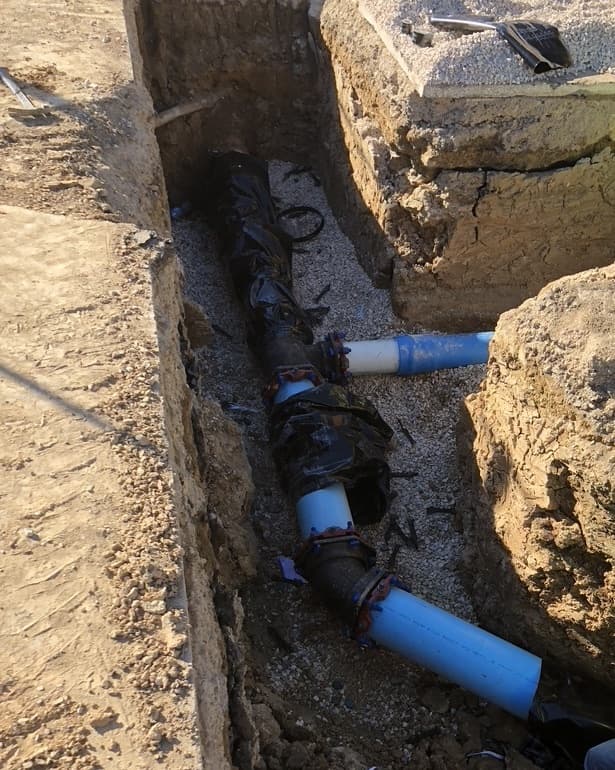
This is where our work comes in. The water that feeds your sprinkler system comes from the municipal water supply through a dedicated fire line. This fire line is separate from your domestic water service. It connects to the city water main, runs underground to your building, and feeds into your sprinkler system's riser — the vertical pipe where the system begins inside the building.
Along the way, there are several critical components:
- Fire main — the primary underground pipe that carries water from the city supply to your property
- Post indicator valve (PIV) — a valve, usually in the yard, that controls water flow to the sprinkler system. It has a window that shows "OPEN" or "SHUT"
- Backflow preventer — required on fire lines to prevent water from flowing backward into the city supply
- Fire department connection (FDC) — the Siamese connection on the outside of your building where firefighters can pump additional water into the system
- Fire hydrants — on larger properties, private fire hydrants may be connected to your fire main
Every one of these components needs to be maintained and functional. If your fire main has a leak, your sprinkler system may not have adequate water pressure. If your PIV is stuck shut, no water reaches the sprinklers at all. If your backflow preventer fails its annual test, you're out of compliance with the city.
Types of Fire Sprinkler Systems
Not all sprinkler systems are the same. The four main types you'll encounter in commercial buildings are:
Wet Pipe Systems
This is the most common type. The pipes are always filled with pressurized water. When a sprinkler head activates, water flows immediately. Wet pipe systems are simple, reliable, and cost-effective. They're used in most office buildings, retail spaces, and warehouses in Texas.
Dry Pipe Systems
In a dry pipe system, the pipes are filled with pressurized air or nitrogen instead of water. When a sprinkler head activates, the air pressure drops, which opens a valve that lets water flow into the pipes and out through the activated head. Dry pipe systems are used in areas where pipes might freeze — think unheated warehouses, parking garages, or loading docks. Even in Texas, we get cold enough some winters to make this a concern.
Pre-Action Systems
Pre-action systems are a hybrid. The pipes are dry, but water won't enter them until a separate detection system (like a smoke detector or heat detector) confirms a fire. This two-step activation makes pre-action systems ideal for areas where accidental water discharge would be catastrophic — data centers, museums, server rooms, and archives.
Deluge Systems
Deluge systems have open sprinkler heads (no heat-sensitive elements). When the system activates, water flows through all heads simultaneously. These are used in high-hazard areas like chemical storage facilities, aircraft hangars, and industrial plants where a fire could spread extremely fast.
Maintenance Requirements You Can't Ignore
Texas fire codes, which align with NFPA 25 (Standard for the Inspection, Testing, and Maintenance of Water-Based Fire Protection Systems), require regular maintenance of your fire sprinkler system and its supporting infrastructure. Here's a simplified breakdown:
Weekly/Monthly
- Visual inspection of control valves (make sure they're open)
- Check PIV position (should read "OPEN")
- Inspect fire department connections for damage or obstructions
Quarterly
- Alarm device testing
- Waterflow alarm testing
- Supervisory signal testing
Annually
- Backflow preventer testing (required by your city's water utility)
- Fire hydrant flow testing and inspection
- Sprinkler head inspection
- Main drain test to verify water supply
- PIV inspection and operation
Every 5 Years
- Internal pipe inspection
- Fire hydrant full flow test
- Obstruction investigation if warranted
Missing these maintenance windows doesn't just put your building at risk — it can void your insurance coverage, trigger fire marshal violations, and expose you to serious liability if a fire occurs.
Common Problems We See
In our years of working on fire lines and related infrastructure across Texas, here are the issues we encounter most often:
- Underground fire line leaks — these can go undetected for months, slowly undermining your system's water pressure and running up your water bill
- Corroded or stuck PIVs — if the valve hasn't been operated in years, it may not open or close properly
- Failed backflow preventers — the backflow device on your fire line needs annual testing, and failures are common on older devices
- Damaged fire hydrants — vehicle strikes, ground settling, and corrosion can all compromise private fire hydrants
- Inadequate water pressure — sometimes the city's water pressure has changed, or your fire main has developed buildup that restricts flow
Where 1-A Services Fits In
We specialize in the water supply side of fire protection. That means fire line repairs, fire main repairs, hydrant repairs, PIV repairs, underground leak detection and repair, and backflow testing on fire line assemblies. We're the team you call when the infrastructure feeding your sprinkler system needs attention.
We work with fire protection companies, property managers, building owners, and facility maintenance teams across Texas. If your sprinkler contractor identifies a problem with the water supply side of things, there's a good chance they'll refer you to a company like us.
As a family-owned business, we take pride in explaining things clearly, showing up when we say we will, and doing the job right the first time. If you've got questions about your building's fire line infrastructure, give us a call. We're happy to walk you through it.