Fire Line vs Water Line: What's the Difference and Why It Matters
Fire lines and water lines both carry water, but they serve very different purposes and are regulated differently. Here's what property owners need to understand about the distinction.
They both carry water. They both run underground. They both connect to the public water main. So what's the difference between a fire line and a water line? And why does it matter?
If you own or manage a commercial property, understanding the difference between these two systems is more important than you might think. It affects your water bills, your insurance, your fire code compliance, and who you call when something goes wrong. At 1-A Services, we're a family-owned fire protection and backflow company based in Boyd, Texas, and we work with both systems every day. Let's break it down.
What Is a Water Line (Domestic Water Line)?
Your domestic water line — sometimes called the "water service line" — is the pipe that brings water into your building for everyday use. This is the water that flows through your sinks, toilets, showers, drinking fountains, dishwashers, and cooling systems. It's the water your employees and tenants use every day.
Key characteristics of a domestic water line:
- Continuous flow: Water flows through this line constantly throughout the day as people use fixtures and appliances.
- Metered: Your water utility meters the domestic line and bills you based on consumption.
- Smaller diameter: Domestic water lines are typically 1 to 4 inches in diameter for most commercial buildings, though larger buildings may have bigger connections.
- Regulated by plumbing codes: Domestic water systems fall under the International Plumbing Code (IPC) and local plumbing regulations.
- Maintained by plumbers: Licensed plumbers handle installation, repair, and maintenance of domestic water systems.
What Is a Fire Line?
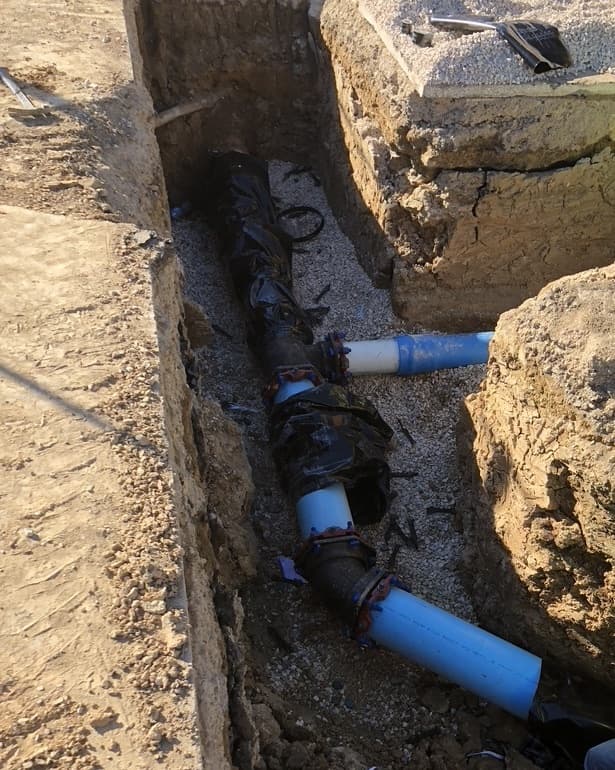
A fire line is a dedicated water supply pipe that serves your building's fire protection system. This includes fire sprinklers, standpipes, fire hydrants on your property, and fire department connections (FDCs). The fire line exists for one purpose: to deliver a large volume of water quickly in the event of a fire.
Key characteristics of a fire line:
- Mostly static: Under normal conditions, water sits in the fire line under pressure but doesn't flow. It only flows when a sprinkler head activates, a fire hydrant is opened, or the system is being tested.
- Separately metered: Most commercial properties have a separate meter for the fire line. Under normal conditions, this meter should show little to no consumption.
- Larger diameter: Fire lines are typically 4 to 12 inches in diameter (or larger) because they need to deliver high volumes of water at high pressure during a fire event.
- Regulated by fire codes: Fire lines fall under NFPA standards (particularly NFPA 13 for sprinkler systems and NFPA 24 for underground fire mains) and local fire codes.
- Maintained by fire protection companies: Licensed fire protection contractors — not general plumbers — handle installation, testing, and repair of fire lines and fire protection systems.
Why the Distinction Matters
Understanding the difference between fire lines and water lines isn't just academic — it has real practical implications for property owners:
Different Regulations and Inspections
Domestic water systems and fire protection systems are governed by different codes, inspected by different authorities, and maintained by different types of contractors. Your domestic water system is inspected by the plumbing inspector. Your fire protection system is inspected by the fire marshal. Mixing up the two — or assuming one contractor can handle both — can lead to compliance gaps.
Different Backflow Requirements
Both fire lines and domestic water lines typically require backflow prevention, but the requirements are different. Fire line backflow preventers are usually larger and may be a different type than domestic backflow preventers. They're also tested and reported separately. At 1-A Services, we test backflow preventers on both fire lines and domestic lines, so we can handle everything in one visit.
Different Billing
Because fire lines and domestic lines have separate meters, they show up as separate charges on your water bill. Understanding which meter is which helps you identify problems. For example, if your fire line meter is showing significant consumption but no one has been using the fire system, you probably have a fire line leak. If your domestic meter is high, the issue is somewhere in your plumbing system.
Different Repair Contractors
When your domestic water line has a problem, you call a plumber. When your fire line has a problem, you need a fire protection contractor. This matters because the repair methods, materials, and code requirements are different. A plumber who's great at fixing kitchen sinks may not be qualified or equipped to repair a 6-inch underground fire main. And a fire line repair typically requires coordination with the fire marshal's office, pressure testing to NFPA standards, and proper documentation.
Insurance Implications
Your commercial property insurance treats fire protection systems differently from plumbing systems. A properly maintained fire protection system can earn you insurance premium credits. A fire line that's out of service or not maintained according to NFPA standards can result in premium increases or coverage issues. Your insurer wants to know that your fire line is intact and your fire protection system is operational.
Common Misconceptions
Over the years, we've encountered several misconceptions about fire lines and water lines:
"My plumber can handle the fire line."
Maybe, maybe not. Some plumbers are also licensed in fire protection, but many aren't. Fire line work requires specific knowledge of NFPA standards, fire code requirements, and fire protection system design. Always verify that whoever works on your fire line is properly licensed and experienced in fire protection.
"The fire line doesn't need maintenance because water just sits in it."
This is one of the most dangerous misconceptions. The fact that water sits in the fire line is actually part of the problem. Stagnant water promotes corrosion, sediment buildup, and biological growth inside the pipe. Fire lines need regular flow testing, valve exercising, and inspection to ensure they'll perform when needed. NFPA 25 lays out the complete maintenance schedule.
"If the fire line is leaking, it's not urgent because we're not using it."
A fire line leak is always urgent for two reasons. First, you're paying for the water that's leaking out — potentially thousands of dollars per month. Second, a leak means your fire protection system may not have adequate water pressure when it's needed. A fire line leak is both a financial problem and a safety problem.
"The city maintains the fire hydrants on my property."
Not necessarily. If the fire hydrants are on your private property (as opposed to in the public right-of-way), they're your responsibility. This includes annual flow testing, lubrication, and any repairs. Many property owners are surprised to learn this, but it's clearly spelled out in NFPA 25 and most local fire codes.
When Fire Lines and Water Lines Interact
While fire lines and water lines are separate systems, they do interact at a few key points:
- The water main: Both lines connect to the public water main, usually through separate taps and meters.
- Backflow preventers: Both lines have backflow preventers to protect the public water supply from contamination. These devices prevent water from flowing backward from your property into the public system.
- Combined services: Some older or smaller buildings may have a combined service where the domestic water and fire protection share a single connection. This is less common in newer construction but still exists.
What to Do If You're Not Sure
If you're a property owner or manager and you're not sure about the status of your fire line — where it runs, whether it has a separate meter, when it was last inspected, or whether it's leaking — the best thing to do is have a qualified fire protection company take a look.
At 1-A Services, we can walk your property, identify your fire line components, check your meters, test your backflow preventers, and inspect your fire protection system. We'll give you a clear picture of where things stand and what, if anything, needs attention.
We serve commercial properties throughout Dallas, Fort Worth, Arlington, Plano, Irving, Frisco, Denton, McKinney, San Antonio, Houston, Austin, and communities across Texas. Whether you need backflow testing, fire line repair, hydrant service, or a full fire protection system assessment, we're here to help. We're a family business, and we treat every property like it's our own. Give us a call.