Private Fire Hydrant Maintenance: Your Responsibilities as a Property Owner
If your commercial property has private fire hydrants, you're responsible for their maintenance and testing. Here's what that involves and why it matters.
Here's something that catches a lot of commercial property owners off guard: if you have fire hydrants on your property, they're probably your responsibility — not the city's.
Most people assume that all fire hydrants are maintained by the local water utility or fire department. And that's true for public hydrants — the ones along the street on public right-of-way. But the hydrants in your parking lot, on your building's grounds, or along your private access roads? Those are private fire hydrants, and maintaining them falls squarely on you as the property owner.
At 1-A Services, we inspect, test, and repair private fire hydrants for commercial properties across Texas. Let's talk about what's involved and why it matters more than you might think.
Public vs. Private Fire Hydrants: What's the Difference?
The distinction is simple but important:
- Public fire hydrants are located on public property or public right-of-way and are connected to the public water main. The water utility or municipality is responsible for their maintenance.
- Private fire hydrants are located on private property and are connected to the property's private fire line. The property owner is responsible for their maintenance.
If you own a shopping center, office complex, apartment community, warehouse, industrial facility, or any commercial property with on-site hydrants, those hydrants are almost certainly private. They're part of your fire protection system, just like your sprinklers and fire alarm.
Why Private Hydrant Maintenance Matters
Private fire hydrants exist for one reason: to give the fire department a water supply when they respond to a fire on your property. If a hydrant doesn't work when firefighters need it, the consequences can be devastating — longer response times, reduced water flow, and potentially catastrophic fire damage.
Beyond the life-safety issue, there are practical reasons to keep your hydrants maintained:
- Fire code compliance: NFPA 25 (Standard for the Inspection, Testing, and Maintenance of Water-Based Fire Protection Systems) requires annual inspection and periodic testing of private fire hydrants. The fire marshal will check for compliance.
- Insurance requirements: Your commercial property insurance likely requires that fire hydrants be maintained and operational. A non-functional hydrant could affect your coverage or premiums.
- Liability: If a fire occurs and your private hydrants are non-functional due to neglected maintenance, you could face significant legal liability.
- Property value: Well-maintained fire protection systems are a factor in commercial property valuation and due diligence during sales or refinancing.
What Does Private Fire Hydrant Maintenance Include?
NFPA 25 outlines specific requirements for private fire hydrant inspection, testing, and maintenance. Here's what's involved:
Annual Inspection
Every private fire hydrant should be visually inspected at least once a year. During the inspection, a qualified technician checks:
- Accessibility: Is the hydrant accessible? Can a fire truck get to it? Is anything blocking it — parked cars, landscaping, fencing, dumpsters?
- Physical condition: Is the hydrant upright and stable? Is the barrel damaged, leaning, or corroded? Are the caps in place and operable?
- Operating nut: Can the hydrant be opened and closed? Is the operating nut in good condition, or is it stripped or corroded?
- Outlets: Are the outlet nozzles and threads in good condition? Can fire hose connections be made?
- Drainage: For dry-barrel hydrants (the standard type in Texas), the barrel should drain after the hydrant is closed. If it doesn't, water sits in the barrel and can freeze in winter or promote corrosion.
- Paint and visibility: Is the hydrant painted and visible? Many jurisdictions require hydrants to be painted specific colors (often red, but check your local requirements). A hydrant that blends into the landscaping is harder for firefighters to find in an emergency.
Annual Flow Testing
In addition to the visual inspection, private fire hydrants should be flow tested annually. Flow testing involves opening the hydrant fully and measuring the water flow rate and pressure. This verifies that the hydrant can deliver adequate water for firefighting operations.
Flow testing also helps identify problems in the underground fire line — a significant drop in flow or pressure compared to previous years could indicate a leak, a partially closed valve, or a deteriorating pipe.
5-Year Full-Flow Test
NFPA 25 requires a full-flow test at least every five years. This is a more comprehensive test that measures the hydrant's flow capacity at residual pressure and compares it to the original design requirements. The results help determine whether the water supply is still adequate for the fire protection needs of the property.
Lubrication and Exercising
Hydrant valves and operating mechanisms need to be exercised (opened and closed) regularly to prevent them from seizing. This is typically done during the annual inspection. Stems and threads should be lubricated as needed.
Common Problems We Find
After years of inspecting private fire hydrants across Texas, here are the issues we see most often:
- Hydrants that won't open: The operating nut is seized due to corrosion or lack of use. If a hydrant hasn't been exercised in years, it may not open when the fire department needs it.
- Broken or missing caps: Outlet caps protect the threads and keep debris out of the hydrant. Missing caps are a common finding and an easy fix.
- Leaking hydrants: A hydrant that leaks from the stem packing, the drain, or the barrel indicates internal problems that need repair.
- Obstructed hydrants: Landscaping that has grown up around the hydrant, bollards installed too close, or vehicles regularly parked in front of it. Firefighters need at least 3 feet of clearance on all sides.
- Low flow or pressure: This could indicate a problem with the hydrant itself or with the underground fire line feeding it. Either way, it needs investigation.
- No drainage (dry-barrel hydrants): If the barrel doesn't drain after the hydrant is closed, the drain valve may be clogged or damaged. Standing water in the barrel leads to freezing and corrosion.
- Impact damage: Hydrants in parking lots get hit by vehicles more often than you'd think. Even a minor impact can misalign the valve or crack the barrel.
Repair vs. Replacement
Many hydrant problems can be repaired in place — replacing packing, rebuilding the valve mechanism, replacing caps, or clearing the drain. But if the barrel is cracked, the base is damaged, or the hydrant is severely corroded, replacement is the better option.
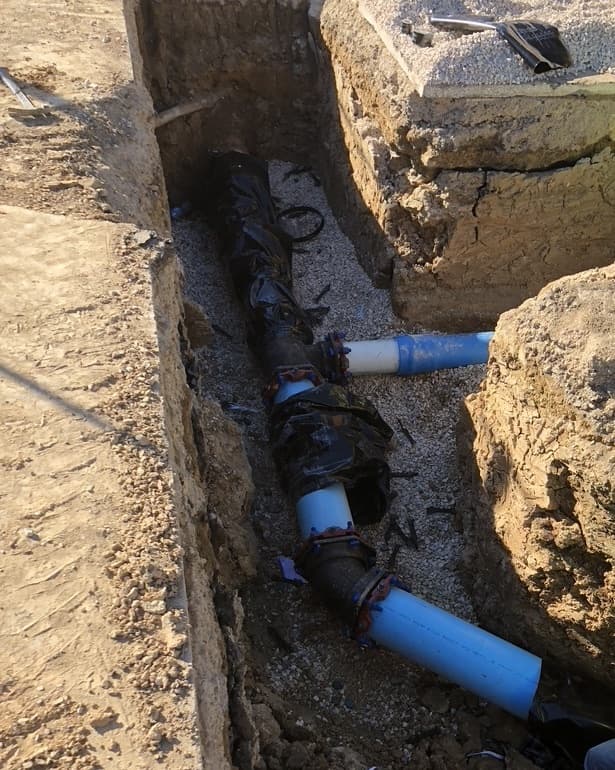
Hydrant replacement involves excavation, disconnecting the old hydrant from the underground fire line, installing the new hydrant, backfilling, and testing. It's a bigger job, but sometimes it's the only way to ensure reliable operation.
What About Fire Hydrant Painting?
Yes, hydrant color matters. Many Texas municipalities have specific color-coding requirements for fire hydrants based on their flow capacity. The most common system uses NFPA 291 color coding:
- Light blue: 1,500 GPM or greater (Class AA)
- Green: 1,000 to 1,499 GPM (Class A)
- Orange: 500 to 999 GPM (Class B)
- Red: Less than 500 GPM (Class C)
Check with your local fire department for their specific requirements. Keeping hydrants properly painted improves visibility and helps firefighters quickly identify available flow capacity.
Stay on Top of It
Private fire hydrant maintenance is one of those responsibilities that's easy to overlook — until the fire marshal flags it or, worse, until there's a fire and the hydrant doesn't work. Don't let it get to that point.
1-A Services provides comprehensive private fire hydrant inspection, testing, and repair services for commercial properties throughout Texas. We'll put your hydrants on a maintenance schedule, keep records of every inspection and test, and make sure you're compliant with NFPA 25 and local fire code requirements.
If you're not sure when your private hydrants were last inspected — or if they've ever been inspected — give us a call. We're a family-owned company out of Boyd, Texas, and we'll take care of your hydrants like they're our own. Because when it comes to fire safety, there's no room for shortcuts.