Underground Fire Line Leaks: What Property Managers Need to Know
An underground fire line leak can compromise your fire protection system and your property. Here's how to spot the signs and what the repair process looks like.
If you manage a commercial property with a fire sprinkler system, you've got underground fire lines running beneath your parking lot, landscaping, or building slab. These pipes carry water from the city main to your fire protection system, and they're under pressure 24 hours a day, 7 days a week. When one of those lines develops a leak, it's not just a plumbing problem — it's a fire safety problem.
At 1-A Services, we specialize in underground fire line leak detection and repair across Texas. We've worked with property managers, facility directors, and building owners on everything from small pinhole leaks to major line failures. Here's what you need to know.
Why Underground Fire Lines Leak
Underground fire lines are typically made of ductile iron, cast iron, or in some older installations, steel. Over time, several factors can cause these pipes to develop leaks:
- Corrosion: This is the number one cause. Soil conditions in many parts of Texas are corrosive to metal pipes, especially in areas with high clay content or acidic soil. The pipe corrodes from the outside in, eventually creating holes.
- Ground movement: Texas soil — particularly the expansive clay soils common in the DFW area — swells when wet and shrinks when dry. This constant movement puts stress on underground pipes and can crack joints or separate connections.
- Age: Many commercial properties in the Dallas-Fort Worth metroplex were built in the 1970s, 80s, and 90s. If the fire line has never been replaced, it could be 30 to 50 years old.
- Poor installation: Inadequate bedding material, improper thrust blocking, or insufficient burial depth can all lead to premature failures.
- Root intrusion: Tree roots seek out moisture. If there's even a tiny leak or a loose joint, roots will find it and make it worse.
Signs You Might Have an Underground Fire Line Leak
Underground leaks can be tricky because you can't see the pipe. But there are telltale signs that something is wrong:
- Unexplained increase in water bills: If your water usage spikes without any change in operations, an underground leak is a likely culprit. Fire lines are metered in many jurisdictions, so check your fire line meter specifically.
- Wet spots or standing water: Soggy areas in your parking lot, landscaping, or near your building that don't dry out — especially when it hasn't rained — are a classic sign.
- Low pressure on your fire system: If your fire riser pressure gauge shows a gradual decline, water is leaving the system somewhere. This is a serious fire safety concern.
- Green patches in landscaping: An area of grass that's noticeably greener or growing faster than the surrounding area may be getting extra water from a leak below.
- Sinkholes or pavement settling: Water escaping from a pipe underground can wash away soil, creating voids that eventually cause the surface to sink or collapse.
- Fire department connection (FDC) issues: If the fire department tests your system and finds low flow or pressure, the fire line may be compromised.
Why You Can't Ignore a Fire Line Leak
We understand the temptation to put off a fire line repair. It's disruptive, it's expensive, and the leak might seem minor. But here's why you need to act:
- Fire protection compromise: Your sprinkler system needs adequate pressure and flow to work in an emergency. A leak reduces both. If there's a fire and your system can't deliver, the consequences are catastrophic.
- Code violations: Fire marshals and insurance inspectors check fire system pressure. A leak that causes low pressure can result in violations, fines, or increased insurance premiums.
- Property damage: Underground water will find a path. It can undermine foundations, flood basements, destroy landscaping, and erode parking lots.
- Water waste and cost: Even a small leak can waste tens of thousands of gallons per month. That's money literally going into the ground.
The Repair Process
Here's what a typical underground fire line leak repair looks like when you work with 1-A Services:
Step 1: Leak Detection
We use a combination of methods to locate the leak, including acoustic listening equipment, pressure testing, and visual inspection. The goal is to pinpoint the leak location as precisely as possible before we start digging — because nobody wants to excavate more than necessary.
Step 2: Excavation
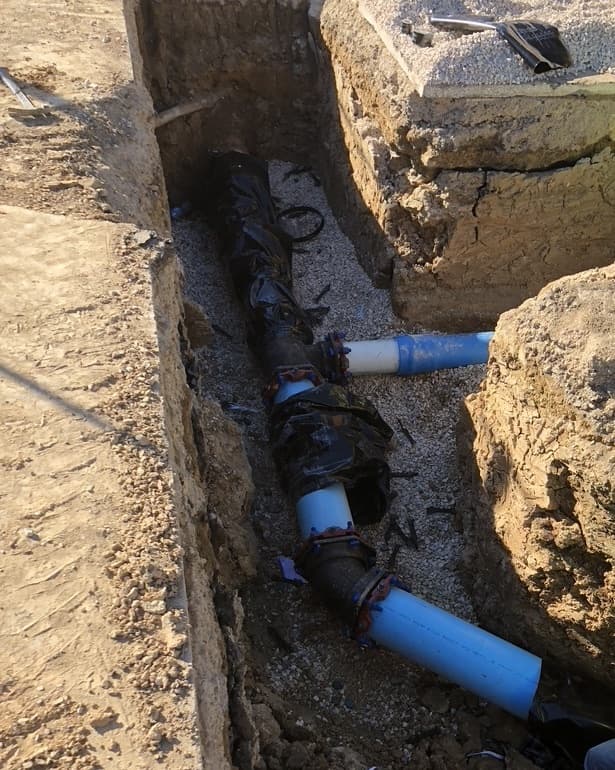
Once we know where the leak is, we excavate to expose the pipe. Depending on the location, this might mean cutting through asphalt, concrete, or landscaping. We work carefully to minimize disruption to your property and coordinate with you on timing.
Step 3: Repair or Replace the Damaged Section
If the damage is localized — a single joint failure or a small corroded section — we can often cut out the bad section and install a new piece of pipe with mechanical couplings. If the pipe is in poor condition overall, we may recommend replacing a longer run to prevent future failures nearby.
Step 4: Pressure Test
After the repair, we pressure test the line to verify it holds. This is a critical step — we need to confirm the repair is solid and there aren't additional leaks elsewhere on the line.
Step 5: Backfill and Restoration
We backfill the excavation with proper bedding material, compact it, and restore the surface — whether that's asphalt, concrete, or soil. We leave the site clean and safe.
What About Pipe Lining or Trenchless Repair?
Some companies offer trenchless pipe lining as an alternative to traditional excavation. While this technology has its place, it's not always appropriate for fire lines. Fire lines have specific flow and pressure requirements, and any repair method needs to meet NFPA 24 standards. We'll always recommend the approach that's right for your specific situation — not just the one that sounds easiest.
Preventive Steps for Property Managers
You can't prevent every underground leak, but you can catch them early:
- Monitor your fire line water meter monthly for unexplained usage
- Check your fire riser pressure gauge weekly — note any gradual decline
- Walk your property regularly and look for wet spots, sinkholes, or unusually green patches
- Keep records of your fire line's age, material, and any previous repairs
- Schedule annual fire system inspections with a qualified company
If you suspect an underground fire line leak at your property, don't wait. The longer a leak goes unaddressed, the more damage it does and the more expensive the repair becomes. Give 1-A Services a call — we'll help you figure out what's going on and get it fixed right.