Why Your Water Bill Might Be Hiding a Fire Line Leak
A sudden spike in your water bill could be more than a billing error — it might be an underground fire line leak costing you thousands. Here's how to spot the signs and what to do about it.
You open your water bill and the number doesn't look right. Maybe it's double what you normally pay. Maybe it's triple. Your first thought is probably a billing error, or maybe a running toilet somewhere in the building. But if you own or manage a commercial property with a fire sprinkler system, there's another possibility that most people never consider: an underground fire line leak.
At 1-A Services, we're a family-owned fire protection and backflow company based in Boyd, Texas, and we've helped property owners across the DFW metroplex track down fire line leaks that were silently draining thousands of gallons of water — and thousands of dollars — every month. Let's talk about why these leaks happen, how to spot them, and what it takes to fix them.
What Is a Fire Line?
A fire line is the dedicated water supply pipe that feeds your building's fire protection system. This includes fire sprinklers, standpipes, fire hydrants on your property, and fire department connections. The fire line is typically a large-diameter pipe (4 to 12 inches or more) that runs underground from the water main to your building.
Unlike your domestic water line, which you use every day for sinks, toilets, and irrigation, the fire line sits there quietly under pressure, waiting to deliver a massive volume of water in case of a fire. Because it's underground and rarely used, problems can develop for months or even years before anyone notices.
How Fire Line Leaks Drive Up Water Bills
Here's the part that catches most property owners off guard: your fire line is metered. Most commercial properties have a separate water meter for the fire line, and you're billed for every gallon that passes through it. When the fire line is working properly, very little water flows through that meter — maybe a small amount during testing or when the system is serviced.
But when a leak develops in the underground pipe, water flows continuously. Even a small crack in a 6-inch fire line can leak hundreds or thousands of gallons per day. That water seeps into the surrounding soil, often without any visible sign on the surface. Meanwhile, your fire line meter is spinning, and your water utility is tallying up the charges.
We've seen cases where property owners were paying $5,000 to $15,000 per month in excess water charges before they realized the fire line was leaking. In some cases, the leak had been going on for over a year before the property owner connected the dots.
Signs You Might Have a Fire Line Leak
Fire line leaks are tricky because the pipe is buried underground, so you can't just look at it and see the problem. But there are several warning signs to watch for:
Unexplained Water Bill Increases
This is the most common first sign. If your water bill has increased significantly and you can't account for it through normal usage changes, check your fire line meter. If it's showing consumption when no one is using the fire system, you likely have a leak.
Wet or Soggy Areas on the Property
If you notice areas of your parking lot, landscaping, or grounds that are consistently wet or muddy — especially when it hasn't rained — that water has to be coming from somewhere. An underground fire line leak can saturate the soil above it, creating visible wet spots on the surface.
Sinkholes or Settling Pavement
Over time, a fire line leak can wash away the soil supporting your pavement, sidewalks, or building foundation. If you notice areas where the ground is sinking, cracking, or settling unevenly, an underground water leak could be the cause.
Low Pressure in the Fire Protection System
If your fire sprinkler system is showing lower-than-normal pressure readings, it could indicate that water is escaping through a leak before it reaches the building. This is a serious safety concern because it means your fire protection system may not perform properly in an emergency.
The Fire Line Meter Is Running
Walk out to your fire line meter and look at it. If the dial is moving and nobody is using the fire system, you have a leak. It's that simple. This is the quickest and most definitive check you can do.
Common Causes of Fire Line Leaks
Underground fire lines can develop leaks for several reasons:
- Corrosion: Older ductile iron and cast iron pipes corrode over time, especially in acidic or mineral-rich soil. Texas soil conditions vary widely, and some areas are particularly hard on underground metal pipes.
- Ground movement: Texas is known for expansive clay soils that swell when wet and shrink when dry. This constant movement puts stress on underground pipes and can cause joints to separate or pipes to crack.
- Tree root intrusion: Tree roots seek out water sources and can grow into pipe joints, gradually forcing them apart and creating leak paths.
- Poor installation: Pipes that weren't properly bedded, backfilled, or joined during installation are more likely to develop problems down the road.
- Age: Many commercial properties in the DFW area are 20, 30, or 40+ years old. The fire lines installed when these buildings were constructed have been under constant pressure for decades, and they don't last forever.
How Fire Line Leak Repair Works
Once a leak is confirmed, the repair process typically involves several steps:
Leak Location
First, we need to pinpoint exactly where the leak is. This may involve acoustic leak detection equipment, pressure testing, or in some cases, selective excavation along the pipe route. The goal is to find the leak without tearing up your entire property.
Excavation
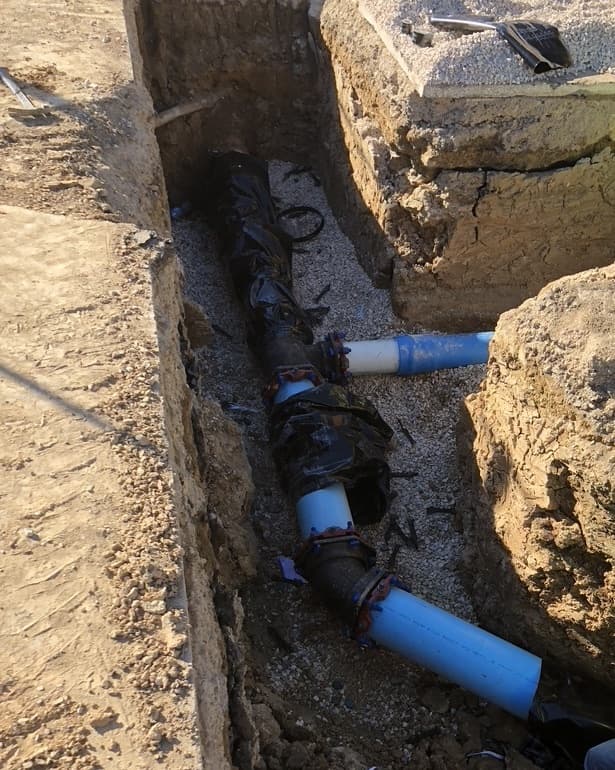
Once the leak is located, the area above the pipe is excavated to expose the damaged section. Depending on the depth of the pipe and the surface material (asphalt, concrete, landscaping), this can range from a straightforward dig to a more involved operation.
Repair or Replace the Damaged Section
The repair method depends on the type and extent of the damage. A single cracked joint might be repaired with a mechanical coupling. A corroded section of pipe may need to be cut out and replaced. In severe cases where the entire fire line is deteriorated, a full replacement may be the most cost-effective long-term solution.
Pressure Testing
After the repair, the line is pressure tested to confirm the leak is fixed and the system can hold its rated pressure. This is a critical step — you don't want to backfill the excavation only to discover the repair didn't hold.
Restoration
Finally, the excavation is backfilled and the surface is restored. This might mean repaving asphalt, replacing concrete, or re-grading and re-seeding landscaping.
The Cost of Ignoring a Fire Line Leak
Some property owners are tempted to put off fire line repairs because of the cost. But consider what you're paying in the meantime:
- Excess water charges: Hundreds or thousands of dollars per month, every month, until the leak is fixed
- Property damage: Soil erosion, pavement damage, and potential foundation issues from the constant water flow
- Fire safety risk: A leaking fire line may not deliver adequate water pressure when you need it most
- Code violations: A fire protection system that can't maintain proper pressure may fail inspection
In almost every case, the cost of repairing the leak is far less than the cost of ignoring it for even a few more months.
Let 1-A Services Find and Fix Your Fire Line Leak
If you suspect a fire line leak on your property — or if your water bill has been climbing and you can't figure out why — give us a call. We serve commercial properties throughout Dallas, Fort Worth, Arlington, Irving, Grand Prairie, Mesquite, and the surrounding areas. We'll help you track down the problem, get it repaired, and stop the bleeding on your water bill. As a family-owned company, we understand that every dollar matters, and we'll work with you to find the most practical, cost-effective solution.